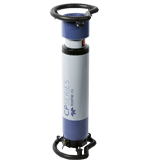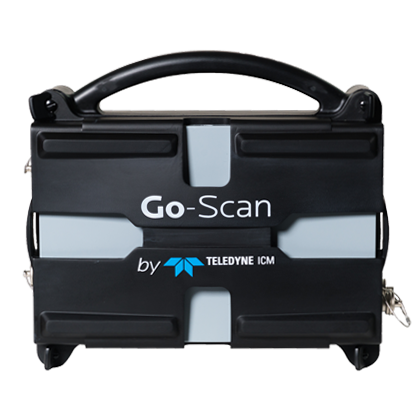


For more than 25 years, SCI Control e Inspección has relied on Teledyne ICM X-ray generators to support industrial inspection projects across the country. Today, the company is gradually expanding its use of digital radiography to deliver faster results, improve responsiveness in the field and meet growing customer expectations around environmental responsibility. In this interview, Alexandre Soria, Director of SCI France, shares his experience with the transition from film to digital radiography and explains why both technologies still have a role to play in modern NDT operations.
A long-term collaboration between SCI and Teledyne ICM: from film to digital
Before using digital radiography, how did your team operate and what challenges did you face?
“Our company has been carrying out radiographic inspections for more than 40 years.
Originally, we worked with radioactive sources before gradually moving to X-ray generators as the technology became available.
Our partnership with ICM, now Teledyne ICM, goes back more than 25 years. We were already using their generators on large pipeline projects and, at that time, we worked exclusively with film radiography. That meant dealing with all the logistics associated with film: mobile laboratories, chemical products for processing, film storage and transportation. In addition, results were not immediately available, and the quality of an inspection could only be confirmed after the films had been processed.
Today, we operate 17 Teledyne ICM generators and have progressively introduced digital radiography into our activities.”
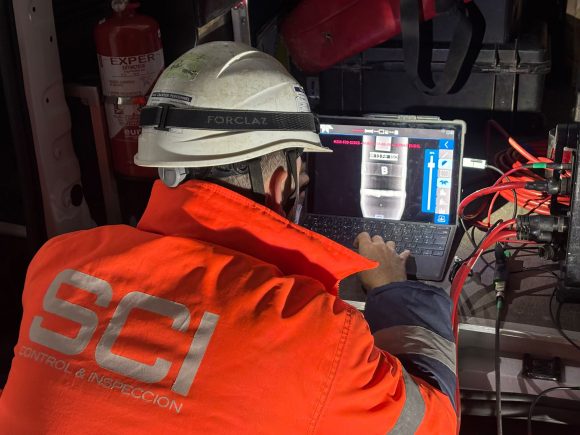
An SCI operator reviewing an inspection image in the field with Sherlock NDT software. © SCI France
“The biggest change is that today we know immediately whether the inspection is good or not. The operator no longer has to wait for the film to be developed.”
How did you first hear about Teledyne ICM, and what convinced you to choose the company?
“We have known ICM for more than 25 years, long before the Teledyne acquisition. The first contacts came through our Spanish colleagues who were already using ICM generators for international projects. When we expanded our activities in France, we naturally continued that relationship.
At the beginning, we chose Teledyne generators because they are extremely robust and reliable. We work in demanding environments (rain, mud, construction sites) and the equipment has consistently proven itself in the field. Regarding digital radiography, what appealed to us was how easy the system is to use. Operators can learn it quickly and start working efficiently.
The quality of the after-sales support has also always been an important factor. When several teams are mobilized on a project, having responsive support is essential.”
How did you introduce digital radiography within SCI?
“Like any new technology, the beginning was not easy.
Fortunately, we were able to rely on the support of the Teledyne ICM team throughout the project. Requests for improvements and field feedback were always discussed and taken into consideration.
We introduced the technology gradually and today we operate four digital detectors. We continue to share our feedback so that both the equipment and the working methods can keep evolving.”
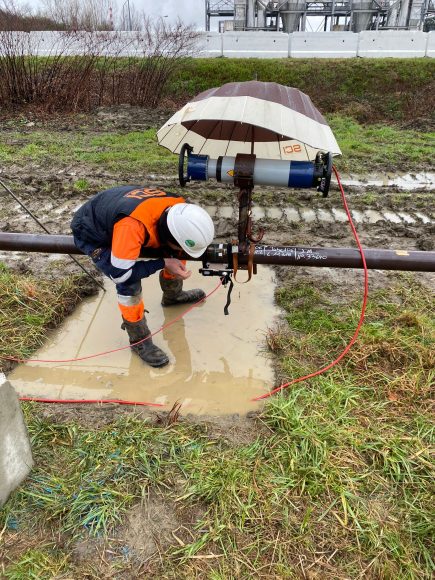
Our CP200DS X-ray generator and Go-Scan 1510XR detector deployed on a pipeline inspection project under real field conditions. © SCI France
“We work in demanding environments (rain, mud, construction sites) and the equipment has consistently proven itself in the field.”
Why SCI chose Digital Radiography and what it brings today
What were you looking for in a digital radiography solution, and how has it helped you achieve those objectives today?
“Our main objective was to get immediate results after the exposure. With film radiography, operators sometimes had to wait several hours before knowing whether the inspection was acceptable. That was especially challenging when working far from the office, because they couldn’t be certain that everything was correct before leaving the site.
Today, they get that answer immediately. That removes a lot of uncertainty and gives operators greater confidence in their work.
Having immediate access to the image has also changed the way we operate. With film, there were situations where you would hesitate to try a different positioning or a different approach because you didn’t know whether the result would be usable until much later. With digital radiography, we can be more flexible. If the image isn’t what we expect, we see it immediately and can adjust or repeat the shot straight away.
The technology has also helped us become more responsive to our customers. We can provide results much faster than before, which improves the level of service we offer.”
“With digital radiography, we can see the result immediately. If the image isn’t what we expect, we can adjust and repeat the shot straight away.”
What benefits have you seen since introducing digital radiography into your operations?
“We are still at the beginning of this transition. The investment remains significant and digital equipment is still more fragile than traditional equipment.
I would not say that digital radiography completely replaces film. On large projects involving a high volume of inspections, film can still be very efficient and, in some situations, easier to position than a digital detector.
Beyond the immediate availability of the image, another benefit concerns the environmental impact. Digital radiography allows us to reduce the use of chemicals associated with film processing, which is something customers are increasingly asking for.
We have also reduced the risk of unnecessary return visits. With film, a problem might only be discovered after the films had been processed, which sometimes meant travelling back to site to repeat an inspection. By being able to validate inspections immediately, we avoid many of those situations.”
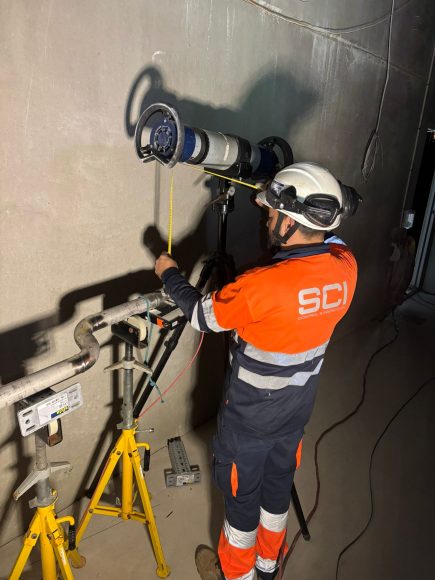
An SCI operator positioning our CP200DS X-ray generator and Go Scan 1510 digital detector for the inspection of a small diameter pipeline.© SCI France
Digital Radiography in the field: applications and results
How do you currently use the solution?
“We use digital radiography on a daily basis and continue to refine our practices based on field experience.
Today, it is mainly used on small-diameter pipelines and district heating networks.
We have already completed more than 20 kilometers of pipeline inspections on major gas projects in France using digital radiography, and several additional projects are currently being prepared.”
Looking ahead: how Digital Radiography will continue to evolve
Do you plan to expand the use of the solution in the future?
“Absolutely.
Our most recent investment was in a flexible detector, and our objective now is to use it on as many applications as possible to fully benefit from its capabilities.
We also believe the technology will continue evolving rapidly. Today, detectors are still thicker than films, which can be a limitation for certain applications. But it is entirely possible that one day detectors will become as thin and easy to position as film. If that happens, a much greater proportion of applications could move toward digital radiography.”
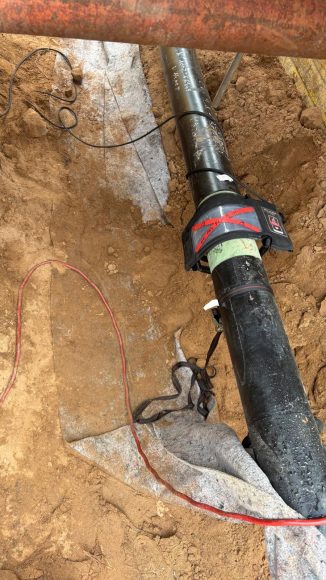
SCI France’s recently acquired Go-Scan 1025B bendable detector positioned on a pipeline during a field inspection. © SCI France
What advice would you give to other inspection companies considering Digital Radiography?
“I believe digital radiography clearly represents the future of our industry.
The more companies adopt it, the more feedback will be collected and the faster the technology will continue to improve.
That does not mean film should disappear overnight. Each technology still has advantages depending on the application.
But the benefits are already very clear: immediate results, reduced operator stress, fewer chemicals, better responsiveness towards customers and fewer unnecessary journeys. These are advantages we see every day in the field.”
“The more companies adopt digital radiography, the more feedback will help improve the technology and make it even better suited to field applications.”
Conclusion
For SCI, digital radiography is not about replacing film overnight. It is about adding another tool that allows inspectors to react faster, give customers quicker answers and reduce some of the operational constraints associated with conventional film radiography.
With 17 Teledyne ICM generators, four digital detectors and more than 20 kilometers of gas pipeline inspections already completed using digital radiography, SCI continues to expand its use of the technology where it brings the greatest value.
As Alexandre sees it, the future will belong to companies that can combine proven inspection methods with emerging digital technologies while always choosing the right tool for the application at hand.
Who is Alexandre Soria?
Based in Bordeaux, Alexandre Soria is Director of SCI France and oversees the company’s non-destructive testing (NDT) activities. Having worked with Teledyne ICM equipment for more than 25 years, he has witnessed first-hand the evolution of radiographic inspection, from traditional film radiography to today’s digital technologies.
About SCI Control e Inspección
SCI Control e Inspección is an industrial inspection company with more than 40 years of experience. The group operates internationally through 23 branches in Spain, as well as operations in France, Mexico and Chile, supported by partnerships around the world.
In France, SCI provides non-destructive testing (NDT) services nationwide from its Bordeaux office, using a wide range of surface and volumetric inspection techniques to help customers meet the most demanding industry standards and regulations.
You want to share your experience with our products?
Contact us:
Eva Libert — Marketing & Communication Manager
eva.libert@teledyne.com
+32 87 60 71 33