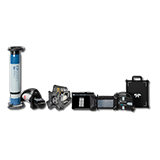


Digital radiography is replacing film in NDT because it enables faster inspections, reduces operational costs, improves safety, and supports fully digital workflows. Unlike film-based radiography, digital solutions provide instant image access, eliminate chemical processing, and allow real-time analysis and sharing of inspection data, helping companies increase productivity and streamline operations.
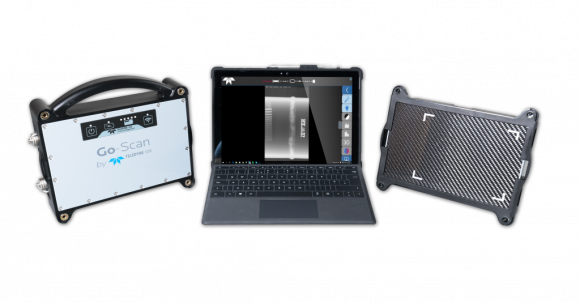
Our digital detector Go-Scan 1510 with Sherlock NDT software
Introduction
Film radiography has long been the standard in non-destructive testing (NDT). Today, however, digital radiography (DR) is rapidly becoming the new industry benchmark, offering major improvements in performance, efficiency, and workflow integration.
In our experience, the real turning point is no longer image quality alone, it’s the ability to accelerate inspections while simplifying the entire workflow.
Across industries such as oil & gas or industrial services, companies are no longer asking if they should switch to digital but when.
Here are 5 key reasons why more NDT professionals are making the transition.
1. Faster inspections and real-time results
Film-based radiography requires chemical processing and waiting time before results can be analyzed.
With digital radiography:
- images are available instantly
- results can be validated immediately on site
Benefit: faster inspections, increased productivity, and reduced downtime.
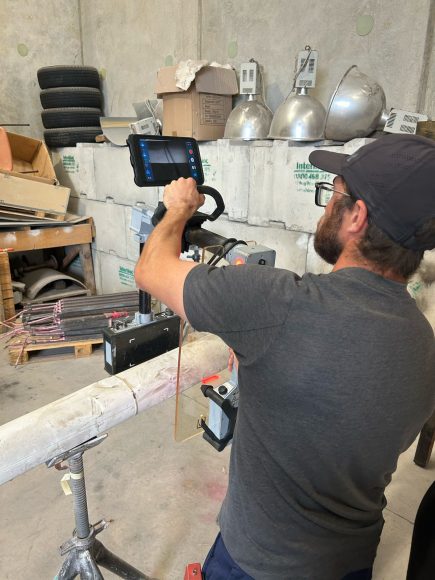
Real-time image acquisition with our Go-Scan C-View
2. Enhanced image quality with advanced software
Digital radiography offers greater flexibility in image analysis:
- contrast and brightness adjustment
- zoom and filtering
- improved defect visibility
While film can offer very high native resolution, digital tools bring something different: the ability to adapt the image instantly to the inspection need, which often results in faster and more reliable decision-making on site.
With our digital radiography software, Sherlock NDT, inspectors can:
- process images in real time
- apply advanced analysis tools
- improve reporting and traceability
Benefit: more accurate inspections and fewer retakes.
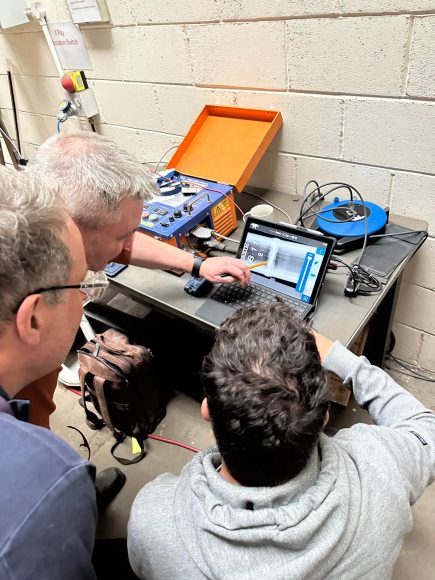
Image analysis with our Sherlock NDT software
3. Lower operational costs
Film radiography involves recurring costs:
- consumables (film, chemicals)
- storage and handling
- longer inspection cycles
Companies that transitioned to digital solutions report that the cost reduction is not only linked to consumables, but also to productivity gains with fewer retakes, faster reporting, and reduced downtime between inspections.
Benefit: lower cost per inspection and faster return on investment.
Market insight: Rising film costs
Radiographic film is becoming increasingly expensive due to rising raw material costs, especially silver, as well as supply and production constraints.
Manufacturers have already announced price increases, making film-based inspections more expensive year after year.
As a result, switching to digital radiography is not only a performance upgrade, but also a way to better control long-term costs.
4. Safer and more sustainable inspections
Digital solutions reduce:
- radiation exposure
- chemical waste
- environmental impact
Benefit: improved safety and easier compliance with health, safety, and environmental (HSE) regulations, thanks to reduced radiation exposure and elimination of chemical processing.
5. Fully digital workflows and data-driven inspection
Digital radiography enables a fully connected workflow:
- digital storage of images
- instant sharing with teams or clients
- integration into reporting and maintenance systems
Benefit: better traceability, faster decision-making, and alignment with Industry 4.0.
Real-world example: how KAEFER improved CUI inspections with digital radiography
In industries such as oil & gas, corrosion under insulation (CUI) remains one of the most complex inspection challenges, often requiring intrusive methods to access and assess potential corrosion.
Before adopting digital radiography, KAEFER Australia relied heavily on physical insulation removal to visually inspect suspected areas (an invasive, time-consuming, and costly process that added significant constraints to field operations).
By introducing digital radiography solutions from Teledyne ICM, KAEFER teams were able to inspect without systematically removing insulation, enabling a fundamentally different approach to CUI inspection.
The ability to capture and analyze images directly on site helped simplify workflows, reduce operational constraints, and support faster decision-making in real working conditions.
As KAEFER’s experience shows, digital radiography enables a shift from invasive inspection methods to more efficient, non-intrusive workflows.
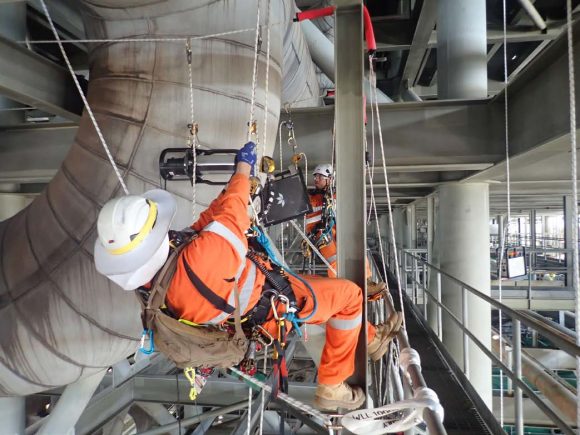
Operators installing our battery-operated portable X-ray generator, the CP160B, and our X-ray digital detector, the Go-Scan 4335, to perform an inspection. © KAEFER AUSTRALIA
Conclusion
Switching from film to digital radiography is no longer just a technological upgrade. It is a strategic move to improve efficiency, reduce costs, and modernize inspection processes.
For many organizations, the shift to digital is becoming a competitive advantage, enabling them to respond faster, operate more safely, and deliver more value to their customers.
Further insights
This article is based on industry data, manufacturer announcements, and market trends related to radiographic film and digital radiography in NDT.